

Website Builds + Redesigns
From $1,000
A site that does a job: explain the business clearly, answer the questions buyers actually ask, and hand the lead to something that catches it.
Diagnose · Architect · Build
Created.Systems turns operational complexity into connected systems for established service businesses and emerging franchises: websites, operational apps, and the software your whole operation runs on.
Most system builders understand software. I understand the business that the software has to run.
The pattern
Nothing here was a bad decision. Each tool was the right call the week it was added. Ten of them later, the operation runs on workarounds, and the workarounds only exist in one person's memory.
Revenue isn't the test. Complexity is.
How the work goes
In that order, every time. Software built before the operation is understood just automates the mess faster.
Before anything gets built, we map how work actually moves through your business, including the parts that only live in someone's head. Most of what looks like a software problem turns out to be an undecided process.
I design the system on paper first: what it holds, who touches it, where the handoffs are, and what has to stay flexible. You approve the shape of it before a line of code exists.
Built in stages, in a working business, without a shutdown week. Each stage is usable before the next one starts, so you get value early and we catch reality early.
What we build
From $1,000
A site that does a job: explain the business clearly, answer the questions buyers actually ask, and hand the lead to something that catches it.
From about $3,000
One stubborn part of the business, rebuilt as software: scheduling, dispatch, quoting, inventory, onboarding, inspections, whatever the spreadsheet is holding together.
Five figures, scoped individually
The connected version: intake, clients, jobs, staff, documents, and reporting in one system that tells a single story instead of six conflicting ones.
Scoped individually
For businesses whose revenue depends on people staying: memberships, programs, cohorts, and recurring clients. Retention treated as an operational problem, not a marketing mood.
Who this is for
You have real customers, real staff, and real revenue. The business works, it just costs you far more effort than it should, and most of that effort is yours.
Location one works because you are in it. Locations two through five need the operation to be repeatable, visible, and teachable without you in the room.
Probably not a fit: pre-revenue ideas looking for a technical co-founder, businesses wanting a template site with no operational change, or anyone who wants the software built before deciding how the work should run.
What changes
Intake, clients, jobs, and documents in a single system instead of six tools and a group chat.
The steps are in the system, not in your head, so the team can run a week without you.
Reporting built from how you actually make money, not from whatever a template shipped with.
Structure that repeats, so the second and fifth location run the same way as the first.
Why Kira
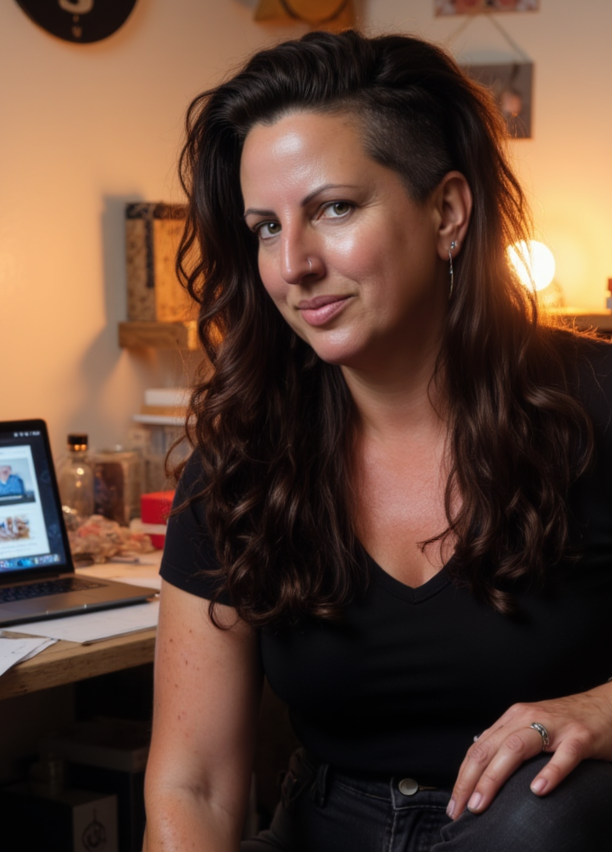
Eleven years running my own company, after nine years inside corporate operations across manufacturing, ecommerce, memberships, education, events, staffing, and fulfillment. The earliest years of my own company were spent on YouTube building an audience and a community rather than revenue, which is exactly why I treat attention and retention as operational work. I have made payroll, fixed margins, trained teams, and untangled processes that grew by accident.
“I didn't come to systems from software development. I came to systems from running businesses that needed to work.”
Proof
Wellness practice · multi-practitioner
Scheduling in one tool, intake forms in another, client history in a binder, payments in a fourth place, with the owner as the integration between all of them. The system connected the pieces so the front desk stopped asking the owner and started using the software.
Questions
Created Systems designs and builds custom business systems for established service businesses and emerging franchises: websites, operational apps, and full business operating systems that connect intake, clients, jobs, staff, and reporting. Every project starts with diagnosing how the business runs before any software gets built.
A developer builds what you specify. Created Systems figures out what should be specified. I ran my own company for eleven years, after nine years in corporate operations, before building software, so the first conversation is about margins, handoffs, and staffing, not frameworks. The difference shows up when a requirement is wrong and someone catches it before it ships.
Website builds and redesigns start at $1,000. Operational apps that replace a spreadsheet or a manual process start around $3,000. Full business operating systems begin in the five figures and are scoped individually, because the price depends on how many parts of the operation the system has to hold. You get a fixed scope and a fixed number before work starts.
Websites typically run a few weeks. Operational apps run one to three months. Business operating systems are built in stages over several months, with each stage usable when it lands. Timelines are given in good faith after diagnosis, not before.
Next step
Tell me how the business runs now and where it breaks. You will leave the call knowing whether a system is the right fix, what it would take, and roughly what it would cost, whether or not we work together.